



Can plastic recycle its future?
Can plastic recycle its future?
Find out what this industry group is prescribing to protect the environment
by Hilda Yaneza
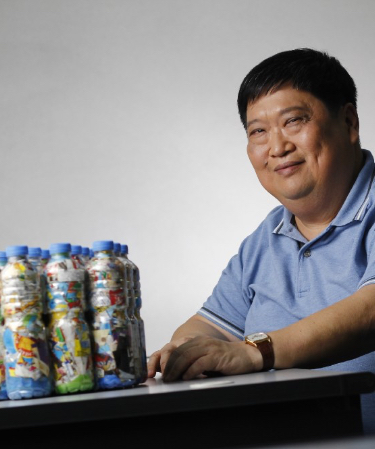
"Ecobricks may be a good idea but it is just a stopgap solution to the long-term plastic problem," according to Vicente Co, president of the Philippine Plastics Industry Association. Photo by Jun Pinzon.
Product diversity, upcycling, and energy efficiency point to the plastics industry’s sustainability efforts
It’s impossible to imagine how our present civilization could ever have existed without plastic.
Cheap and durable, plastic has made whole categories of products more affordable to everyone on the planet. It has made packaging, storing, and transporting food so much safer.
Yet plastic’s absurdly low cost has a high price. Single-use “sando” bags, bottles, and retail sachets clog floodways, landfills and coastal lines, and choke marine animals.
While calls for the total abolition of all plastics used are unrealistic, changes to the ways this material is used are clearly necessary.
Part of the solution lies with proper plastic disposal and effective collection, according to Vicente Co, president of the Philippine Plastics Industry Association Inc. (PPIA).
PPIA represents the country’s downstream plastics industry. Its 250 members are fabricators and manufacturers that convert plastic resins to industrial and consumer products.
Co is convinced that sustainability comes in many forms, and firmly believes that working toward energy efficiency is an important strategy for the industry.
This is where PPIA and its members partner up with the Manila Electric Co. (Meralco).
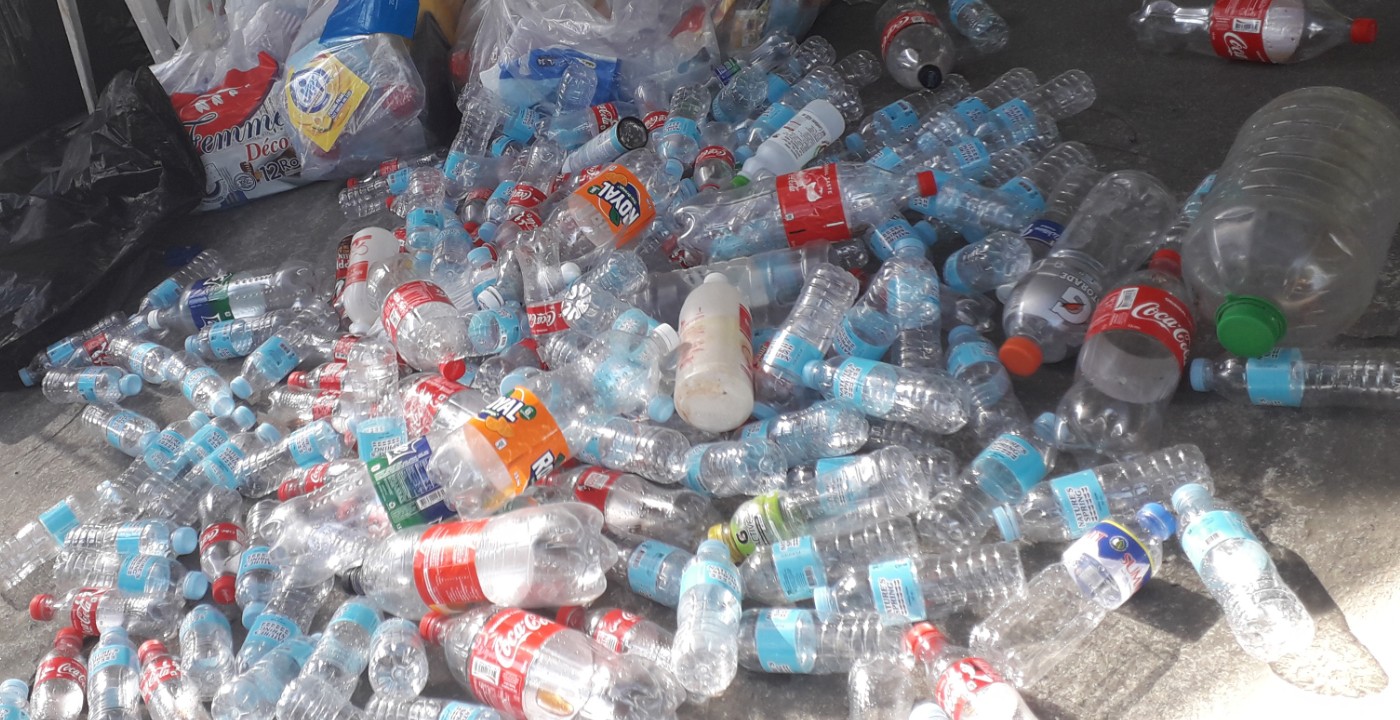
Thousands of single used types of plastics are thrown daily by consumers. Photo by Melin Y. Doria
High-energy consumer
Co admits that electricity is one of the industry’s largest expenses: “Power takes up to 12 to 15 percent of our inputs, so we’re always looking for ways to be more energy-efficient.”
Since plastic production is a fossil fuel-dependent process that uses power-intensive machinery, such as extruders, blow- and injection-molding equipment, and stamping units, PPIA members work closely with Meralco to achieve energy efficiency.
The plastics industry accounts for 4.83 percent of total energy sales for Meralco’s Corporate Business Group. Itself a PPIA member, Meralco actively supports the group’s goals to manage energy costs and become efficient, sustainable, and competitive.
The energy distributor holds seminars, or Power Up forums, at the PPIA head office to share current energy trends and industry best practices.
Many PPIA members are already enrolled in Meralco’s energy efficiency programs, most notably the Peak/Off-Peak Program (POP). This encourages them to maximize electricity usage during off-peak hours, when the cost of producing energy is lower.
The peso savings are an immediate benefit to plastics producers, but the pay-off for the environment is also a boon.
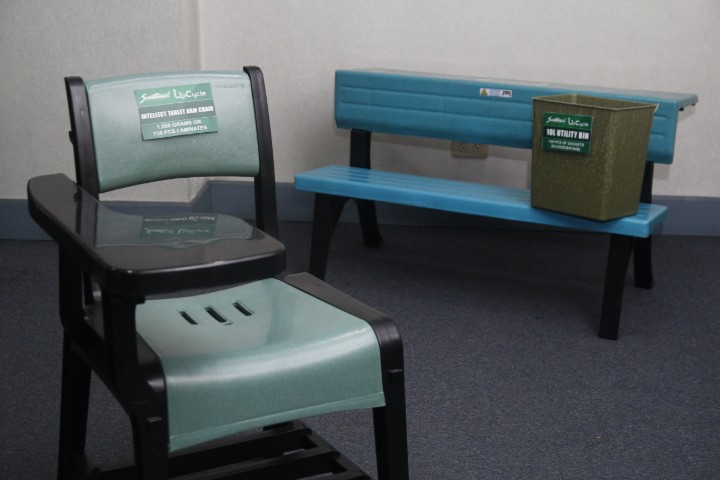
These plastic chairs were made from 20 percent recycled plastic material. Photo by Jun Pinzon
Routine collection and segregation
Co knows waste management and sustainability are critical to the association’s future. Many of its members already have plastics-recycling facilities.
“We need to fix the disposal,” he asserts, “so that plastics will not be harmful.”
However, the plastics industry cannot solve the problem alone. Effective recycling requires the efficient collection of plastic refuse, with proper waste segregation among households and commercial establishments.
“Waste management is the role of the government,” Co opines, “but to be successful, we also need the cooperation of the citizens.”
Packaging accounts for the bulk of plastic generation, and includes various containers, bottles, sachets, and cling film. Co hopes these can be segregated and collected at source, mainly from factories and households, to aid in recycling efforts.
Reuse, recycle, repurpose
The widespread use of sachets reflects the tingi (retail) culture among budget-conscious buyers.
Puncture-resistant and food-safe, sachets and their upsized version, Doypacks, can hold powder, liquid, paste or gel food, personal-hygiene and cleaning products. Made from layers of aluminum foil lining, polyethylene terephthalate, and printed external laminate material, sachets are virtually impossible to recycle.
However, the PPIA has found a way to reuse sachets, turning them into molded plastic furnishings such as school desk-chairs, benches, and trash bins.
For 11,000 units of molded school chairs, recycling uses up 8.5 million sachets weighing 17 tons. That same quantity of recycled plastic sachets goes into 5,000 molded benches.
These flood damage-proof chairs and benches were bought for school donations by corporations that retail their goods in sachets. About a thousand of the chairs were purchased by the University of Santo Tomas.
A flexible future
Dealing with the current plastics output is just one approach. PPIA is determined to align the industry’s response to shifting market forces with nationwide sustainability efforts.
As more local governments began to prohibit the use of plastic carrier bags, Co reports that plastic-bag sales dropped by about 20 percent. This prompted plastic producers to make bags from a material that breaks down into microplastic particles with exposure to sunlight, heat or air.
All the challenges notwithstanding, plastic may yet have a bright future.
Researchers around the world are looking for lasting solutions to the plastics problem. Heading these is the development of true bioplastics, made of plant-based starches such as corn or cassava. These contain no polyethylene and are considered 100-percent biodegradable.
Issues aside, plastic remains essential to the global economy and modern life.
“This is why the plastics industry remains vital and must continue to be part of the solution,” Co concludes.
To learn more, contact your Relationship Manager, call 16210 or email us at corporatepartners@meralco.com.ph.
Story originally posted on Power Club.