



Sustainability in a Pandemic?
Is Environmental Sustainability Important in a Pandemic?
The food and beverage industry was one of the hardest hit industries when COVID-19 happened, but McDonald’s Philippines President and CEO Kenneth Yang says the company is aiming to bounce back, with a renewed commitment to the environment.
By Babe Pañares
Published December 21, 2020
McDonald’s Philippines President and CEO Kenneth Yang says despite the setbacks brought about by 2020, the fast food chain is powering through.
Just like any other brand, big or small, in the food and beverage industry, McDonald's Philippines took a hit as the COVID-19 pandemic battered the economy. As many as 60 percent of its stores nationwide were closed temporarily when the lockdown was first implemented in March. "Everybody was hit hard, and our industry was no exception. But the F&B industry was really one of the hardest hit," said Kenneth Yang, President and CEO of McDonald's Philippines.
Yang, who has steered the brand toward 10 years of continuous growth up until end 2019, said the pandemic presented challenges at an unprecedented magnitude and scale.
It is in the context of this disruption that makes the decision of McDonald's Philippines to push through with piloting its sustainability efforts truly exceptional. For Yang, there is no better time to soldier on with the brand's commitment to make a positive impact on the environment than now despite, and perhaps because of, the upheavals brought about by the novel virus.
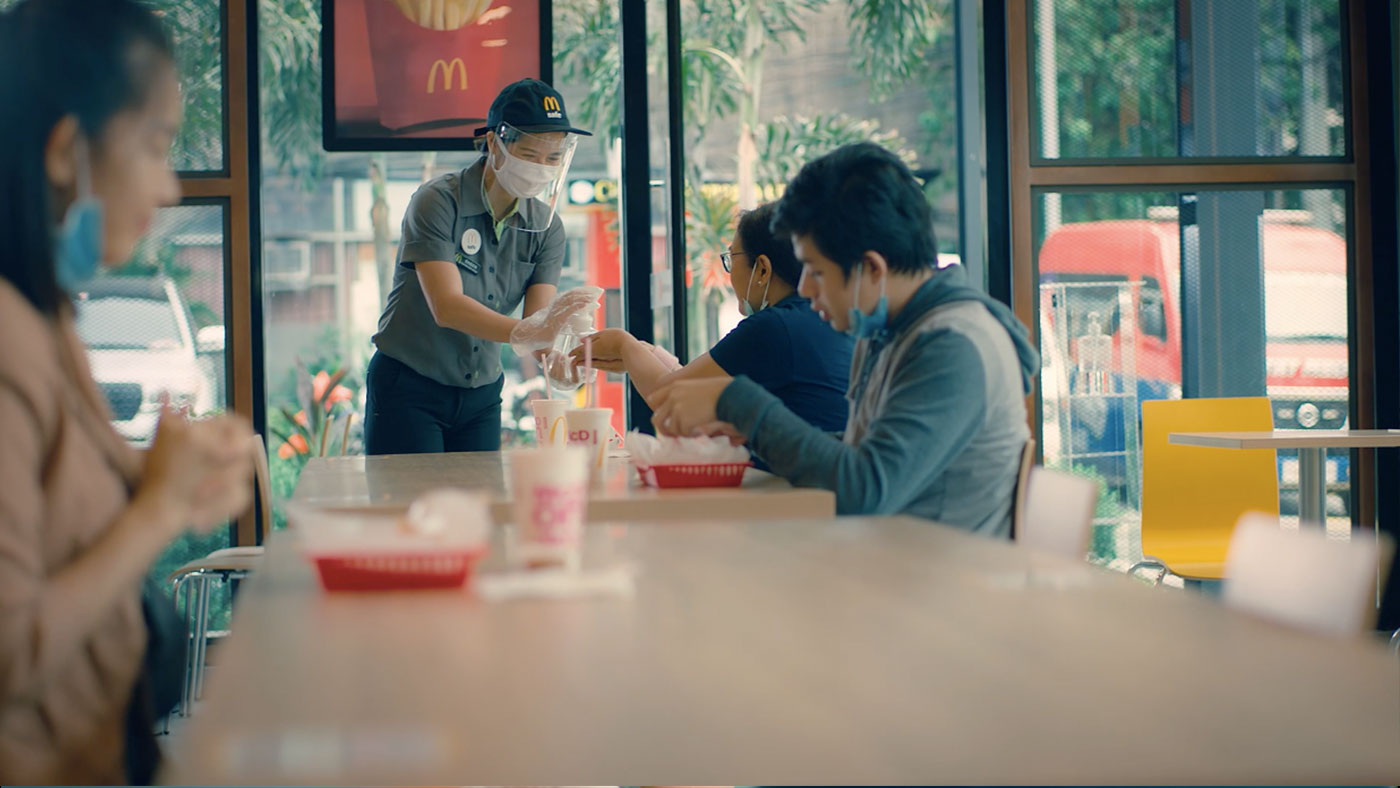
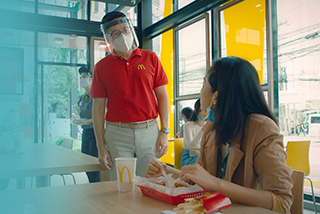
Yang says 90 percent of their stores are now open. IMAGE Courtesy of McDonald's Philippines.
Is sustainability a priority?
It’s easy to brush off and deprioritize sustainability efforts, amidst a global pandemic. But for McDonald’s Philippines, it just made good business sense. The quick-service restaurant giant, in partnership with eSakay, a Meralco subsidiary which offers end-to-end electric transport solutions, has recently launched two units of Electric Vehicle (EV) charging pods at its flagship store along UN Avenue in Manila.
"Our decision to install EV charging pods was customer-driven. We looked into the lives and behaviors of our customers, and we saw that eBikes and eScooters will become more ubiquitous in the future," Yang said.
The pandemic and the ensuing restrictions on mobility during the early months of the Enhanced Community Quarantine validated the initiative as commuters turned to electric vehicles that do not only meet social distancing requirements but are also more energy- and cost-efficient.
In bringing the EV future under its golden arches, McDonald's Philippines became the first fast food brand in the country to take such a step toward sustainability.
Data from the Senate Energy Committee showed that pushing for more electric vehicles in the country may lead to a reduction in oil consumption by as much as 146.56 million barrels per year – or annual savings of about P490 billion.
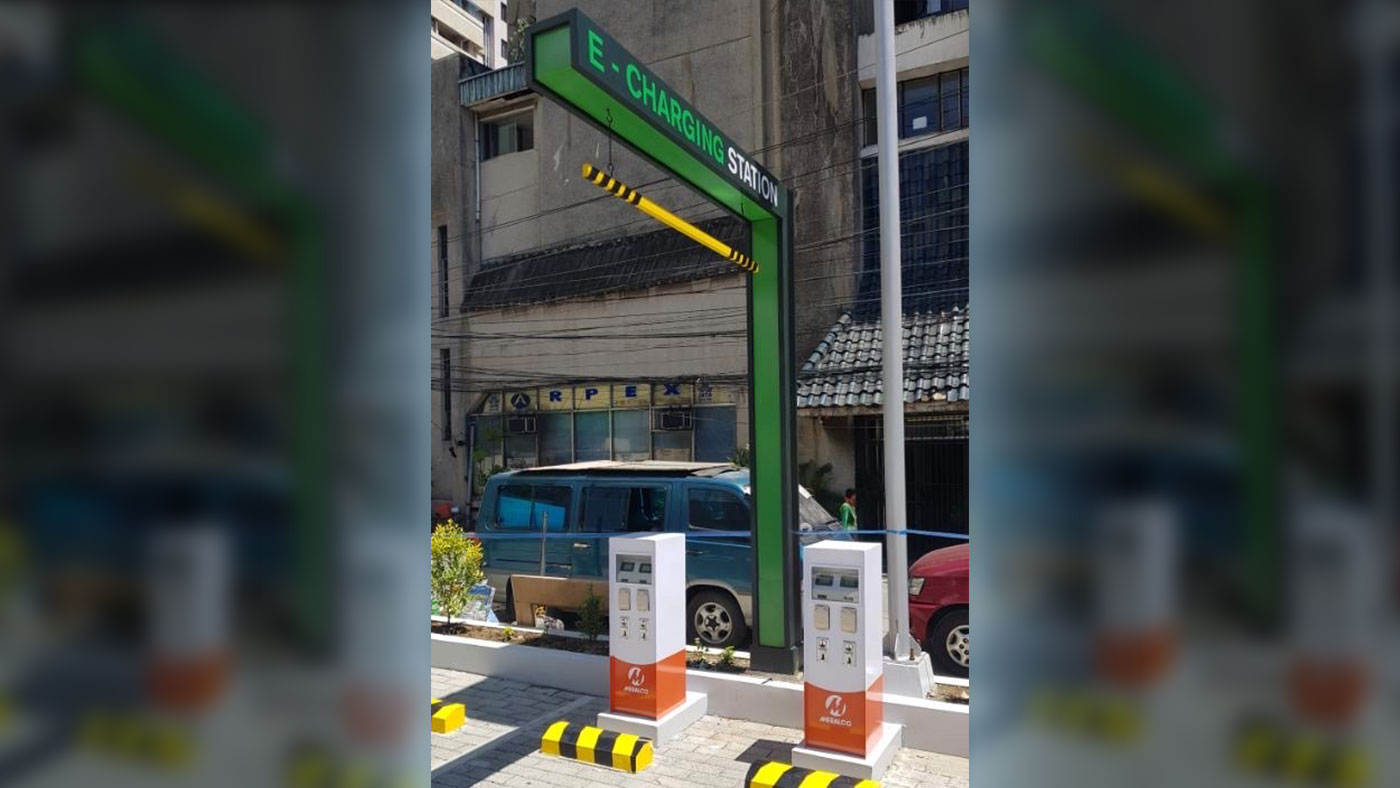
The brand is looking for more ways on how they can achieve higher impact for sustainability, and these EV charging pods are a step in the right direction.
The charging pods can accommodate eBikes, eScooters and eTrikes at a rate of P5 per 10 minutes, which can charge around 3% to 5%, depending on the vehicle specifications.
Yang said McDonald's Philippines will review the EV charging pod initiative to identify other stores where it can be adopted, particularly in business districts like Bonifacio Global City and Makati topping the list.
That the first charging pods were installed in the brand's flagship Green & Good store was only fitting as the UN Avenue store features touchscreen ordering and payment platforms designed for a more cost-effective and environmentally-friendly operation, among other innovations.
"Our team is always looking for other ways to achieve higher impact for sustainability. We plan to install more solar lights which we believe, in the long run, makes good business sense as these bring down our electricity consumption. We also have our used cooking oil picked up by accredited haulers who then recycles it into biodiesel," he said.
Future forward
Also in the pipeline, Yang said, are plans to re-layout parking spaces to allow for bike racks as well as explore other possible use for these spaces like drive-in or a park-order-pay-eat system where customers can enjoy their favorite McDonald's items inside their vehicles.
It is this kind of forward-looking mentality that allowed McDonald's Philippines to weather the pandemic intelligently, revenue loss notwithstanding.
“The pandemic has underscored how we made the right decisions in the past as we established pioneering fundamentals – from digital marketing in 2011, digital commerce with McDelivery app in 2014, & cashless in 2018, & opening more DT stores since 2016. When the pandemic struck, dine-in was not allowed. There was no foot traffic in malls, in tourist areas, and in airports where we also have stores. Our drive-thru and delivery segments allowed us to earn revenues," he said.
McDonald's Philippines, Yang said, was also lucky to have partners who, despite feeling the pandemic pinch themselves, opted to extend a helping hand so that more businesses would survive and have a chance at bouncing back.
"We talked to our partners, our suppliers. Their assistance helped our business survive. We are very grateful for Meralco -- they have always helped us in the past through trainings on how to properly consume electricity, and they responded quickly at the onset of the pandemic," he said.
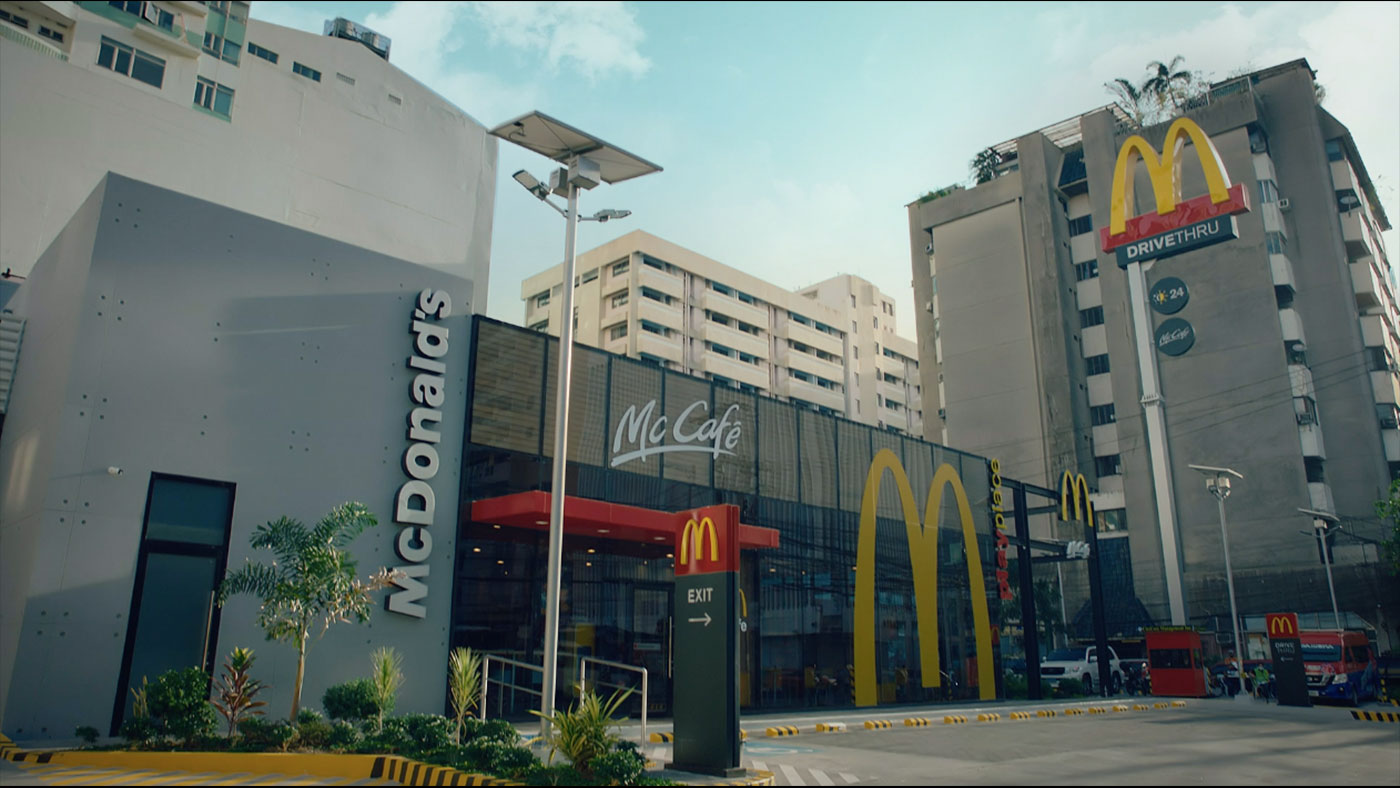
The future looks bright for the fast food chain, as it has shifted its efforts to digital even before the pandemic. IMAGE Courtesy of McDonald's Philippines
GMBD suspension, a huge relief
Meralco suspended its Guaranteed Minimum Billing Demand -- the minimum amount of power that business customers are contractually obligated to pay even if they did not use the power -- for six months to cover the period when majority of McDonald's stores across the country were closed temporarily or were just starting to operate again.
At least 140 store-owned branches and 58 franchised branches were covered by the GMBD suspension. This resulted in savings of as much as P13 million for the fast food chain.
As community quarantine restrictions have slowly eased, McDonald's Philippines is aiming to bounce back better and stronger, and with a renewed commitment to achieving sustainability.
"At least 90 percent of all our stores are now open. We are hoping consumer confidence will also increase," Yang said.
Despite the setbacks, the brand will end 2020 with 20 new stores.
"Even if it is crisis, we have to also think of our business and our brand growth. We are optimistic the Philippines will come out of this period of challenge stronger," Yang said.
#PoweringOurBrighterTomorrow #PoweringTheGoodLife
To learn more, contact your Relationship Manager, call 16210 or email us at corporatepartners@meralco.com.ph.
Story originally posted on Power Club.