




Playing the Long Game
Metro Pacific's Jose Ma. K. Lim plows through the pitfalls and promises of public-private partnerships.
For anyone engaged in a public-private partnership (PPP) project in the Philippines, not just patience but perseverance is an essential prerequisite. When a major infrastructure project can span multiple administrations before the implementation phase begins, it can be frustrating for any private company to get involved.
And "frustrating" puts it mildly, according to Jose Ma. K. Lim, president and chief executive officer of Metro Pacific Investments Corporation (MPIC).
He offers the timeline for the North Luzon Expressway-South Luzon Expressway (NLEX-SLEX) connector road project as an example. It was finally awarded to MPIC unit Metro Pacific Tollways Development Corp. (MPTDC) in September 2016, but the company had initially offered to build the connector road for P18 billion back in 2010, at the close of the Arroyo administration. It obtained approval from the National Economic and Development Authority (Neda) Board in 2012, but subsequent reviews resulted in amended terms for a Swiss challenge, a requirement for unsolicited bids, which were only accepted in December 2015.
Waiting for "go"
"Our connector road waited three administrations before we got it," Lim recounts."It was originally awarded during the Arroyo administration, then former President Benigno S. Aquino III had it reviewed. It was a nightmare."
Meanwhile, road traffic continued to worsen. "We knew that we just had to persist because there is a lack of mass transit; that is why you have this severe congestion. We need more infrastructure."
The connector road project was finally awarded, yet the same cannot be said for other big-ticket PPP projects that remain forestalled for one reason or another.
"The public thinks all that needs to happen is to be awarded the contract," explains Lim, "and then it will go on its own. Not true at all. The bigger challenges are when you start getting ready for the construction phase."
These challenges may include the acquisition of rights-of-way, payments of multiple local taxes, and reinterpretations of existing contracts.
Getting it right
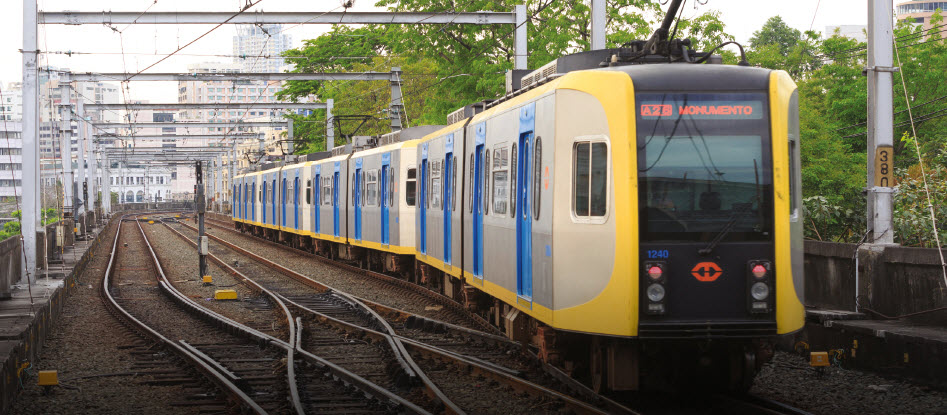
Right-of-way acquisition proves to be a particularly thorny issue for the operations, maintenance and extension of the Light Rail Transit 1 (LRT-1); the MPIC-Ayala consortium took over this project in September 2015.
"It takes about a year just to determine what the final detailed engineering will look like, but until we get right of way, we cannot even get started," bemoans Lim. "We cannot do testing of the ground, which is needed in order to finalize detailed engineering. Unless we can clear the occupants, the construction start date gets delayed."
 The MPIC boss firmly believes that government must be fairer, and cites a case filed before the Supreme Court by another MPIC subsidiary, Maynilad Water Services Inc. With the delayed implementation of a rate increase approved by an arbitration panel, Maynilad claimed P3.44 billion from the government due to losses from Jan. 1, 2013 to Feb. 28, 2014. Maynilad won the case, but the government has not yet carried out the ruling.
"Government implements decisions that are favorable to them, but dithers on unfavorable ones," Lim observes. "There is no consistency. If we lose a case, it's a sure loss. But if we win, we are not sure it is a win."
Taxing issues
In his talk with Japanese businessmen during the Philippine Economic Forum in Tokyo last October 26, Socioeconomic Planning Secretary Ernesto Pernia declared, "after more than two decades since the enactment of the BOT (Build-Operate-Transfer) program and law, which authorizes the financing, construction, operation and maintenance of infrastructure projects by the private sector, the need to improve the framework that governs PPP has surfaced."
Also Neda Director-General, Pernia stressed: "Amendments to the BOT Law and its implementing rules and regulations are among the priority legislations intended to raise the efficacy of private-sector participation and to keep policies attuned to the changing business environment."
However, Lim notes the gulf between intention and application. The issue of taxes became a deal breaker when the LRT-1 Cavite extension project was first offered to potential bidders.
"They wanted us to extend the train by another 11 kilometers," he narrates, "so we raised the issue of local taxes once the concessionaire takes over. The BAC (Bids and Awards Committee) did not respond and instead decided to proceed with the bid. All other bidders and even our consortium members backed out."
Having already spent so much time preparing for this project, MPIC decided to continue to pursue it by submitting a bid conditional on the government addressing the tax issue. This was deemed to be "non-responsive," thus leading to a failed bid.
"The following day we received a call from the government asking why we considered taxes as a deal breaker," Lim recounts. "We presented our calculations and this showed their estimates on taxes to be only 10 percent of our estimate."
He goes on to say that within two weeks, there was approval from Neda for the government to pay for the project's real- property tax. The project was bidded out again a few months later, but by then other bidders had lost interest.
The government now aims to exempt infrastructure projects with "national significance" from paying local taxes. "It has since learned that local taxes are a real issue that need to be addressed, that is why it is trying to amend the BOT law," Lim notes. "I suppose it's part of the learning curve."
For the benefit of all
Other factors contribute to delays in the bidding out and implementation of big-ticket PPP projects, some of which mystify even the MPIC chief.
Case in point: MPIC's bid for a bundle of five airport projects in Davao, Bacolod, Iloilo, Bohol, and Cagayan de Oro. "We finished our due diligence and we were ready to bid," he asserts, "then it stalled because of the 2016 Presidential election. Now I know why it took so long to start the rebid process - they decided to unbundle the airports; no explanation given."
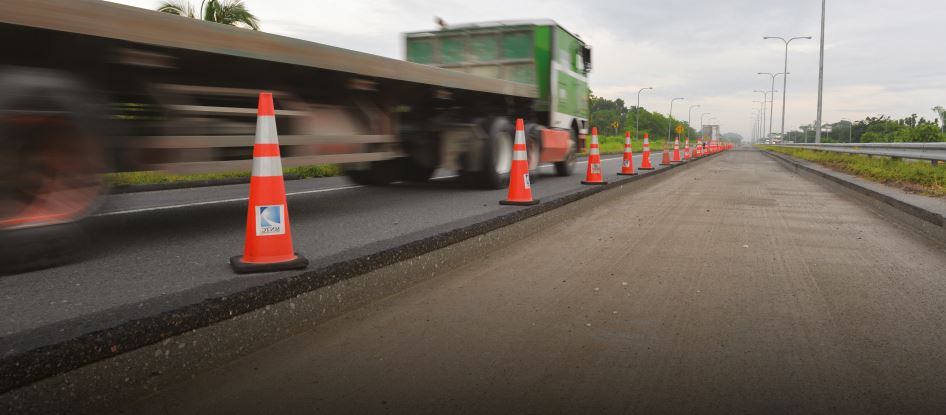
It's not like the pie is small to begin with. "There are more than enough projects for everyone, actually," Lim confides. "It's just that this government lacks the capability to bid them all out. In other countries, this role of preparing bids is itself awarded to private- sector consultants; they get international teams to bid it out for them. They anticipate all of these problems and they can structure these properly. Supposedly, this is the role for which the PPP Center was created."
Speaking at the BusinessWorld Economic Forum last July 25, Finance Secretary Carlos G. Dominguez acknowledges the need to accelerate the implementation of the PPP projects, and says he wants to cut the time for proponents starting their infrastructure projects.
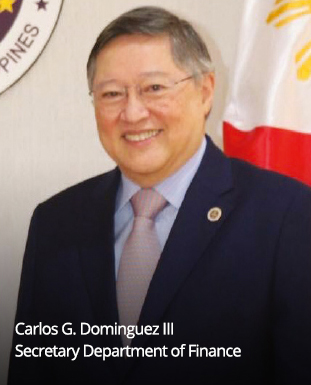 "A typical PPP project takes an average 29 months to get started," he notes. "We want to bring this down to below 20 months. We've been discussing with Neda, which is in charge of the PPP Center, as well as with the Department of Budget and Management to review the approvals process and reduce the red tape."
Lim has reservations about the government's efforts: "The jury is still out on the Duterte administration's handling of PPPs. They haven't delivered anything since they took over, and so far, I cannot see evidence that this is going to move faster than it did in the previous administration."
Thus far, President Rodrigo R. Duterte, as Neda Board chairman, has approved only two PPP projects: the P74.6-billion Ninoy Aquino International Airport development project, and the P1.47-billion New Nayong Pilipino project at Entertainment City.
However, Lim also remains hopeful. "To be fair, this administration is doing its best to deal with problems that have become complex or even unmanageable, because of continuous neglect by previous administrations," he adds. "The confirmation of Arthur Tugade as Secretary of Transportation gives me confidence; I believe he will quickly address the project requirements for LRT-1, the Cavite-Laguna Expressway, and the NLEX-SLEX connector road. I also believe he will treat us fairly with respect to our tariff issues and claims."
In media interviews in January, MPIC chairman Manuel V. Pangilinan expressed support for the Duterte administration's massive infrastructure program.
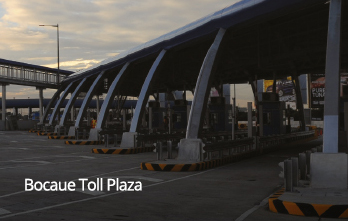 "I think it's something we support. We know the country is in critical need of infrastructure," said the business tycoon.
He added that his group will be submitting various unsolicited proposals for government projects in the areas of infrastructure, agriculture, and power.
He told reporters his group plans to partner with Aeroports de Paris, the operator of the Charles de Gaulle Airport, to develop regional airports in the country.
MPIC remains persistent despite the obstacles, especially when it comes to PPP projects vital to the national interest. "When we go through these travails of arbitration, court proceedings and so on, for me that is just a test to guide future leaders," Lim concludes. "So many companies will not have the patience or resources to keep plugging away, to keep at it. But if you're doing something that will benefit the greater good, then it is worth pursuing."